Major landlord Langsam says crucial MCI regulations never enacted, sues state

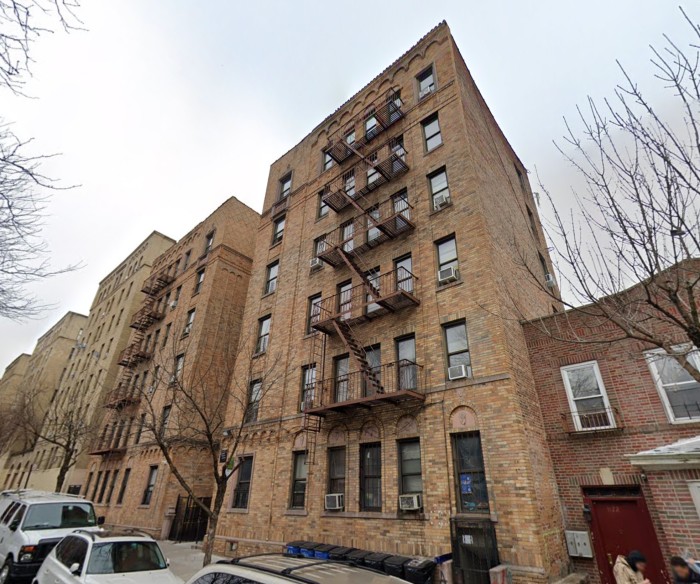
1130 Anderson Avenue (Credit - Google)

Langsam Property Services, as an owner and property manager, alleges in a package of six lawsuits filed yesterday that the state failed to timely update critical housing code regulations which underpin portions of the landmark Housing Stability & Tenant Protection Act of 2019. Since the state’s Department of Housing and Community Renewal allegedly failed to make the changes which the law contemplated but could not enact through legislation itself, the state should not have ruled on Langsam’s six major capital improvement petitions using the 2019 statue, but instead should have used the prior code, since the code, in fact, had never been changed. The petitions only allege the code has not been updated in a narrow set of regulations, and does not allege the entire law was not enacted.

The cases were filed using six separate properties, including for example the 42-unit 1130 Anderson Avenue in Highbridge, the Bronx, which Langsam owns and manages. The PincusCo database currently indicates that Langsam Property Services owned at least 89 commercial properties with 3,247,804 square feet and 3,542 residential units.

This is the third major legal challenge to an aspect of rent regulation or rental assistance that New York City landlords have filed in the past month. PincusCo first reported on the other two.

Last week, two institutional-level city landlords who collectively own tens of thousands of apartments in the city, Brookfield Properties and LeFrak, filed separate but similar lawsuits on November 11, alleging portions of the state’s Covid-era rent relief program were unconstitutional as well as plagued with delays.

Brookfield and LeFrak alleged the state Emergency Rental Assistance Program, as administered by the NYS Office of Temporary and Disability Assistance, prevents them from commencing nonpayment cases in part because the state has not made decisions about whether the applicant deserves the rent relief. The landlords are seeking orders vacating the automatic stays on nonpayment proceedings, among other relief.

The other legal challenge came from a series of suits Michael Shah of Delshah Capital, Jason Glick of GPG Properties and Ben Shaoul of Magnum Real Estate Group, filed in mid-October, alleging the city’s Certificate of No Harassment designation as it applied to their Manhattan and Brooklyn rental properties was arbitrary and capricious.

What Langsam alleges is that the Housing Stability & Tenant Protection Act directed the commissioner of the DHCR to make changes to the state code, but those changes were never made. Despite that, when the state made rulings after the June 2019 law, on MCI applications Langsam made before the law was enacted, the state used the new law’s rules. For example instead of an MCI being spread over 84 months, it was now to be spread over 150 months.

According to one of the petitions, “As a result, while the legislature directed DHCR to make changes to the RSC [Rent Stabilization Code] via Part K of the HSTPA, the RSC was not amended to conform with the HSTPA at the time the MCI Order was issued, yet the Order applied these changes to the detriment of Petitioner. Consequently, because the RSC remained unchanged when the MCI Order was issued, the Rent Administrator was required to apply the rules and regulations that existed at the time, not those that DHCR contemplates will be added in the future.”

However, while RSC §2522.4(a)(4) states the MCI rent increase is amortized over eighty-four (84) months, the Order amortized the rent increase over one hundred fifty (150) months. Moreover, Rent Stabilization Code §2522.4(a) does not state that the rent increase is to be temporary, whereas the Order states that the increase is temporary.”

The petition continues, noting that more than three years after the law was enacted, the state began the process to update the code in these specific areas. “However, on or about August 31, 2022, DHCR issued its proposed amendments to the RSC in the New York State Register, thus beginning the formal process to amend the regulations under SAPA. As a result, DHCR now seeks to amend the RSC, and the proposed amendments include the very changes to RSC § 2522.4(a)(2) that it applied to the Order more than two (2) years ago. Nonetheless, DHCR still has not issued a decision on Petitioner’s PAR.”

Case LINK

Direct link to the property’s ACRIS page and link to DOB NOW portal.

Share this article