Major city landlords call HPD Certificate of No Harassment ‘arbitrary and capricious’ in 7-building court filing

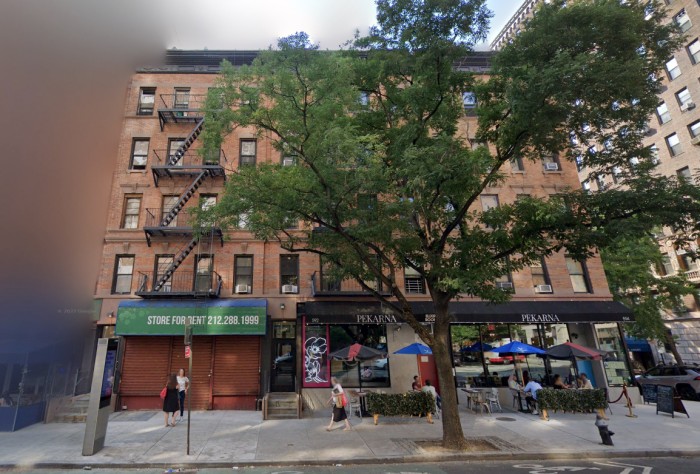
592 Amsterdam Avenue (Credit - Google)

Michael Shah of Delshah Capital, Jason Glick of GPG Properties and Ben Shaoul of Magnum Real Estate Group claim the city’s Certificate of No Harassment designation as it applies to seven of their Manhattan and Brooklyn rental properties is arbitrary and capricious and allows a landlord no opportunity for review, while it devalues buildings by as much as 30 percent. Shah, Glick and Shaoul made the claims in seven nearly identical petitions filed yesterday in State Supreme Court in Manhattan. The petitions seek the removal of the properties from the CONH program or alternatively providing the landlord a waiver. Inclusion on the CONH list, the petitions claim, severely devalues a building even if no affirmative allegations of harassment have been made at the building before being included on the list.

According to the PincusCo database of owners, which is incomplete, Delshah Capital owned at least 47 commercial properties with 947,333 square feet, 833 residential units and a city-determined market value of $208 million. (Market value is typically about 50% of actual value.) The portfolio has $276.7 million in debt, with top three lenders as Arbor Realty Trust, Signature Bank, and Customers Bank respectively. Within the portfolio, the bulk, or 35 percent of the 947,333 square feet of built space are walkup properties, with D3 properties next occupying 28 percent of the space. The bulk, or 50 percent of the built space, is in Manhattan, with Brooklyn next at 50 percent of the space.

The seven buildings in the litigation include GPG’s 592 Amsterdam Avenue, Magnum’s 738 East 6th Street and five Delshah buildings in Brooklyn including 167 Waverly Avenue.

Court actions are the positions of one party and are not necessarily accurate or complete.

The city’s AnneMarie Santiago, HPD’s deputy commissioner for enforcement and neighborhood Services, in testimony in 2021 before the program was extended to 2026, said, “The CONH program seeks to disincentivize property owners from harassing tenants to vacate their homes by conditioning future building permits to convert or demolish the building on proof that no tenants were harassed during the prescribed period of time.”

Housing advocates lauded the extension of the program.

The program

According to one of the Delshah petitions, “The inclusion of a building on the CONH Pilot Program Building List encumbers the building with regulations, the process of which is mired in secrecy, after a non-judicial unilateral decision made by HPD with non-public information, resulting in the rights of use or development being no longer clear to any owner, lender, or potential purchaser.
“In reviewing the building owner’s request for a CONH, generally, HPD makes an initial determination that takes at least 12-16 months2 based upon its own internal review and investigation without informing an owner or producing its investigation for review. If the initial determination is that there is no evidence that harassment has taken place, HPD is required to issue a CONH, finally allowing the owner to apply for permits for material alterations to the building. If the initial determination is that there is evidence that harassment has taken place, an owner can elect to: take a “cure”, which requires a permanent 25% set-aside for low-income housing; or proceed to a hearing for a final determination of whether harassment has occurred.
“As a result of all of the foregoing, typically, a building is devalued by 30% or more simply by being added to the CONH Pilot Program Building List, whether or not harassment has taken place.”
LINK

Share this article