DCP approves Affordable Housing Fast Track, demands more data

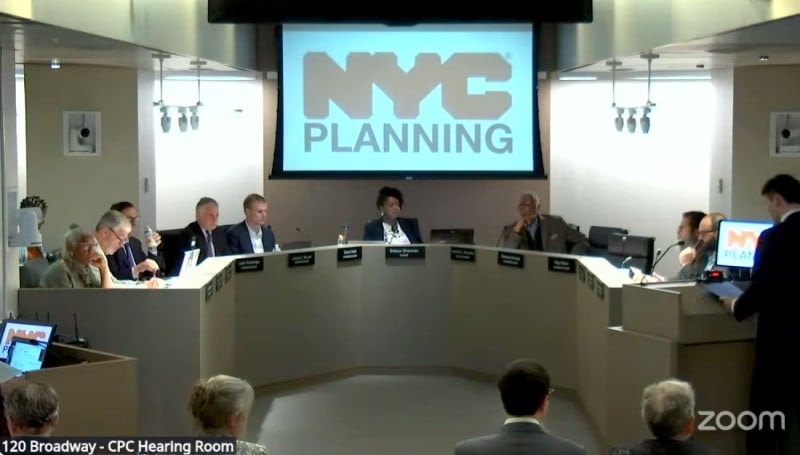
City Planning Commission hearing room, 120 Broadway (Credit - City Planning Commission Zoom on YouTube)

City Planning Commission hearing room, 120 Broadway (Credit - City Planning Commission Zoom on YouTube)

The City Planning Commission officially adopted the Affordable Housing Fast Track Methodology Rule with a vote of 10-1 on April 13, 2026, establishing an expedited public review process for housing applications in the 12 community districts with the lowest rates of affordable housing production.

While Chair Sideya Sherman and Vice-Chairman Kenneth Knuckles supported the rule, with Sherman calling it a “powerful tool to support fairer more balanced growth” and Knuckles saying it was a “reasonable” remedy to the severe affordability crisis, the substance of the discussion immediately shifted to the rule’s potential limitations and the commissioners’ demanding new requirements for data and planning.

PincusCo reported earlier this month on the public debate and hearing around the rule.

The primary point of contention was the narrow scope of the methodology, which only measures new production of affordable housing units and does not account for the preservation of existing affordable housing. Commissioner Gail Benjamin raised the concern that this approach prioritizes the “most expensive way” to deliver affordable housing (new construction) over preservation, such as units that could leave programs like Mitchell-Lama. Benjamin conditioned his support on the Department of City Planning providing specific background and detail to understand why the 12 communities have low production rates—whether due to an “opportunity problem” or already large numbers of affordable housing—so the Commission could properly evaluate future projects.

Commissioner Alfred Cerullo, the only dissenting vote, called the focus on production instead of approval a “huge mistake and misleading,” noting the fast track expedites approval but offers no mechanism to expedite construction, meaning districts won’t receive credit until permits are issued. Commissioner Orlando Marin agreed, stating a plan to closely monitor how subsidy dollars are allocated to ensure projects are built “sooner rather than later.”

The overriding theme was the Commission’s newly heightened responsibility. Commissioner Raju Mann noted that in these Fast Track districts, the CPC is “substituting our judgment for the Council’s”, necessitating an earlier, more serious collaboration with the department to shape large-scale projects. Commissioner Leah Goodridge voted yes with conditions on oversight, stressing that the faster process must not come at the expense of three essential conditions: ensuring affordability levels are truly affordable, securing adequate community engagement given the City Council is bypassed, and guaranteeing infrastructure readiness for schools, transit, and plumbing to accommodate new density.

The most forceful demands came from Commissioner Juan Camilo Osorio, who voted ‘Yes with conditions’ on the immediate creation of new, public data sets, stating they are “required by the CPC to be able to complete the review of the proposals that will be fast tracked”. Osorio demanded three specific new data sets: a reliable, city-produced total number of housing units, rather than relying on outdated Census data; a public data set to track the net loss of income-restricted units; and lot-level data that distinguishes between preservation projects that extend or deepen existing income restrictions versus those that introduce restrictions for the first time.

The Consequence of Undelivered Data

The Fast Track rule is now legally in effect. However, the commissioners’ conditional votes and specific requests for data, such as Osorio’s demand for a reliable count of total housing units or Benjamin’s need for contextualizing data, act as political mandates. If the Department of City Planning (DCP) fails to produce this data, the rule itself is not invalidated, but the City Planning Commission’s ability to provide substantive oversight is severely impaired. The Commissioners have explicitly stated they need this data to complete their review of Fast Track proposals, particularly regarding affordability, density, and infrastructure impact. The practical result of the DCP failing to provide the requested data would be a breakdown in the working relationship and potential procedural slowdowns on a case-by-case basis as commissioners delay votes or demand more information to fill the data gaps, thereby undermining the expedited purpose of the Fast-Track process. The conditional vote ensures that data transparency is an essential lever for the rule’s equitable implementation.

Share this article

Leave a Reply